
La vie sur terre Life on Earth
La vie sur terre (Life on Earth) is one of the most searching and poetic cinematic meditations on Africa at the turn of the millennium. It was originally conceived as part of 2000 Vue Par, a European television series that invited ten outstanding independent producers to imagine the last day of the 20th century in their own countries. Sissako's specific challenge therefore was to make a film about the significance of the start of the global shift into the 21st century for a community navigating severe infrastructure disparities - highlighting the continent's simultaneous connection to and isolation from the global digital age. His solution, the most innovative and critically admired of any of films in the series, was to improvise a "fictional documentary" out of daily life in Sokolo, his father's village in Mali near the southeastern corner of Mauritania. He then overlaid these vignettes with readings from Aimé Césaire, locating them within the poet's critique of the relationship between metropole and periphery. Behind all of this, he weaves the melancholy tones of the great Malian tenor, Salif Keita.
At the outset, Sissako is mindful of Césaire's stricture: "Do not assume the sterile stance of a spectator/ For a screaming man is not a dancing bear." Sissako (playing his alter ego Draaman) appears everywhere in the film riding through the town's maze of mud-brick streets on his bicycle - although he does not seem at all deliberate about where he's going, looping back onto himself. Sissako deliberately avoids imposing a false chiliastic narrative on the quotidian life of Sokolo, constructing his film out of loosely scripted fragments and incomplete story threads. Nothing is neat; life in Sokolo does not adapt to arbitrary Western timelines.
The film's dominant visual motif is leisurely, even lugubrious shots of anonymous people making their way slowly across the boundless savanna or through the dusty streets. Sissako reminds us that for much of the world's population, "life on earth" is still conducted on foot, by donkey cart or bicycle. Life in Sokolo is a far cry from the 21st century trumpeted in the West where the Information Superhighway moves everything in nanoseconds. This is the terrestrial reality which too often is ignored in virtual reality.
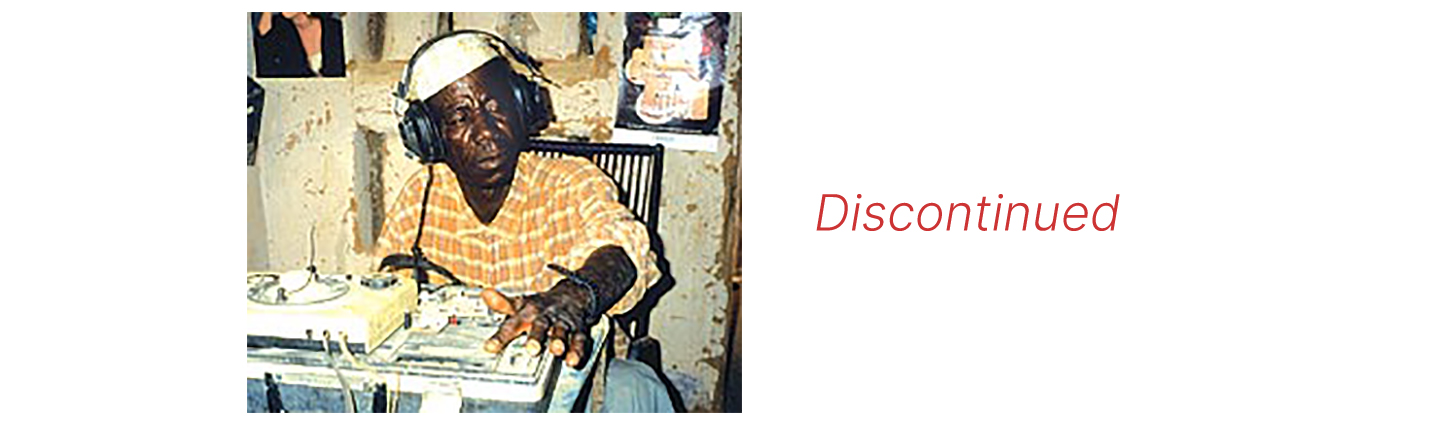
Yet, for so remote a place, Sokolo maintains remarkably close ties to the wider world. Everywhere one looks there is a radio, worn almost like a piece of apparel. Letters and remittances from Europe constitute the town's economic lifeblood and evidence of global pop culture permeates the town. Yet, this communication is very one-sided. Radio France reports on the millennium with its own brand of perky but superficial universalism. The town's youth idle away the morning listening to the broadcast only moving their chairs to escape the creeping sun. In contrast, the antiquated local radio station, appropriately named Radio Colon, offerss alternative coverage, readings from Césaire's Discours sur Colonialism.
Sokolo's determined attempts to maintain contact with the rest of the world are focused and frustrated at the local post office, the busiest place in town and site of its sole telephone. Symbolically, when Sissako/ Dramaan finally receives a call from Paris, the postmaster must hobble across town on crutches to fetch him. "Reaching people is always a matter of luck," the postmaster comments - but he may also be speaking for the filmmaker about the likelihood of successful cross-cultural communication. In an interview Sissako has said, "More important than the message itself is the act of wanting to communicate."
Nana, a beautiful young woman, waits all day to get a call through to her boyfriend Bai in a nearby town. (Sissako "discovered" her character when she accidentally bicycled into a shot and then incorporated her into his improvised script.) Exasperated, she gives up on telecommunications, simply gets on her bike and disappears in the film's final shot into the distance in pursuit of her own destiny. Throughout the film her evasions of the director's mild flirtations could be interpreted as Africa's refusal to abandon an independent course to be part of anybody's story.
In La vie sur terre, Sissako is not simply asking that we remember to include an economically marginalized Africa at the dawn of the 21st century. Nor is he simply lamenting the immense and growing technological inequalities between Global North and South. He is insisting that Africa has its own role to play in the unending work of human transformation. "Europe has fed us lies," Césaire says, "For it is not true that Man's work is done."
"You know it is not hatred of other races
That makes me the plowman of my own.
What I want is universal hungering, universal thirsting.
My ear to the ground, I hear tomorrow pass."
Africa's real potential cannot be fully captured in the dusty streets of Sokolo, nor will it be prefigured in the avenues of Paris or New York; it lives in the deepest aspirations of the poets, filmmakers, and people. Sissako through this film adds Sokolo's voice, however distant and distorted by static, to the global conversation about what our shared future will become.
"A movie of uncommon grace and delicacy ...a compelling lament for a beloved country impoverished by colonialism and stranded in time."
New York Times
"Luminous, poetic, reflective and pointed."
Village Voice
"A poignant tale of the conflict between old and new, of men and women reaching out to each other in a changing world."
Sundance Film Festival
La vie sur terre: Life on Earth
Related Titles
